From Bilateral to Regional: How Thailand and Indonesia Are Shaping ASEAN's Future
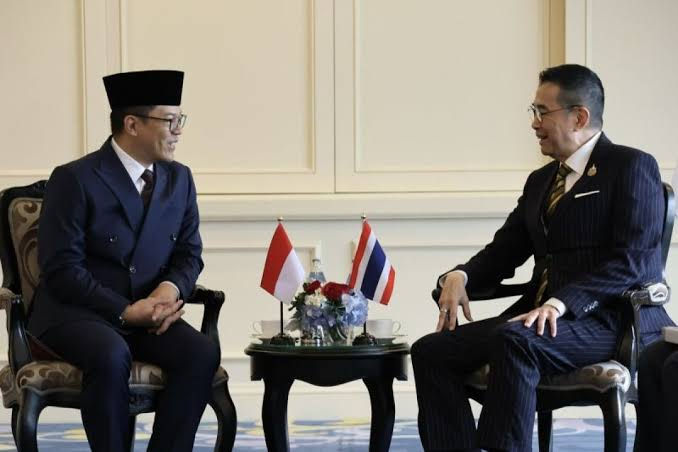
As ASEAN's two largest founding members deepen economic cooperation, their partnership offers a blueprint for stronger regional integration in an increasingly uncertain global economy (Thailand, Indonesia Set US$23bn Trade Target, Expand Ties Across Sectors, 2026).
ASEAN has always advanced through consensus, but consensus often begins with leadership. The recent elevation of Thailand-Indonesia relations to a strategic partnership demonstrates how bilateral cooperation between two of Southeast Asia's largest economies can influence the direction of the wider ASEAN bloc (Indonesia, Thailand Target 20 Bln USD in Two-Way Trade by 2030, 2026).
With global trade becoming more fragmented and geopolitical competition intensifying, deeper cooperation between ASEAN's major economies is no longer simply desirable it is becoming an economic necessity. Thailand and Indonesia are seeking to increase bilateral trade from approximately US$20 billion to US$23 billion while expanding cooperation across investment, food security, energy, manufacturing, tourism, and the digital economy (Indonesia, Thailand target 20 bln USD in two-way trade by 2030, Vietnam Plus, 2026).
Their partnership matters not only because of its economic scale, but because it may establish precedents for future ASEAN integration (Thailand and Indonesia Elevate Bilateral Ties to Strategic Partnership, 2025).
Key Facts
Thailand and Indonesia have elevated relations to a strategic partnership (Thailand and Indonesia elevate bilateral ties to strategic partnership, Vietnam Plus, 2025).
Bilateral trade currently exceeds US$20 billion, with a target of US$23 billion by 2030 (Indonesia, Thailand Target 20 Bln USD in Two-Way Trade by 2030, 2026).
Together, the two countries represent more than 350 million consumers (Thailand And Indonesia Announce Strategic Partnership, 2025).
Both are founding members and among ASEAN's largest economies (Chapter 4 The ASEAN Member States and ASEAN Economic Integration, 2017).
Cooperation is expanding beyond trade into investment, energy, food security, tourism, and digital transformation (Indonesia, Thailand Deepen Defense, Economic, Security Cooperation, 2026).
Stronger bilateral partnerships can accelerate broader ASEAN integration (Thailand and Indonesia Move to Translate Their Strategic Partnership, Thai Government, 2025).
Background
ASEAN integration has traditionally progressed gradually through regional agreements negotiated among all ten member states. While this consensus-based model has promoted stability, it can also slow implementation (ASEAN Integration Monitoring Report, 2021).
Increasingly, deeper cooperation between key member states is becoming an important driver of regional progress. Agreements reached between major economies often establish practical models that can later be expanded across ASEAN (Chapter 4 The ASEAN Member States and ASEAN Economic Integration, 2017).
Thailand and Indonesia are particularly well positioned to play this role. Both possess large domestic markets, diversified industrial bases, strategic maritime locations, and growing digital economies. Their combined economic weight gives bilateral initiatives significance well beyond their national borders (Thailand, Indonesia Set US$23bn Trade Target, Expand Ties Across Sectors, 2026).
The ASEAN View
From an ASEAN perspective, stronger Thailand-Indonesia cooperation reinforces one of the bloc's central objectives: deeper regional integration without sacrificing national sovereignty (ASEAN Regional Forum, 2001).
Rather than replacing ASEAN-wide initiatives, bilateral partnerships can complement them by demonstrating successful approaches to trade facilitation, investment cooperation, infrastructure development, and regulatory alignment (Chapter 4 The ASEAN Member States and ASEAN Economic Integration, 2017).
When ASEAN's larger economies deepen cooperation, they often reduce uncertainty for businesses while creating frameworks that other member states can adapt and join over time (Thailand and Indonesia Move to Translate Their Strategic Partnership, Thai Government, 2025).
Analysis
Bilateral Agreements Can Become Regional Standards
Many of ASEAN's most successful initiatives began with cooperation between a smaller number of members before expanding across the wider region (Chapter 4 The ASEAN Member States and ASEAN Economic Integration, 2017).
If Thailand and Indonesia successfully streamline customs procedures, encourage investment, improve digital trade, or strengthen industrial cooperation, these measures could eventually influence broader ASEAN policy discussions. In this sense, bilateral cooperation becomes a testing ground for regional integration (Thailand and Indonesia Move to Translate Their Strategic Partnership, Thai Government, 2025).
More Than Trade
The strategic partnership extends beyond increasing bilateral commerce. Cooperation in renewable energy, food security, digital industries, manufacturing, tourism, and investment reflects ASEAN's broader economic priorities (Indonesia, Thailand Deepen Defense, Economic, Security Cooperation, 2026).
Diversifying cooperation across multiple sectors also strengthens resilience against external shocks, reducing dependence on any single industry or trading partner (Thailand, Indonesia Set US$23bn Trade Target, Expand Ties Across Sectors, 2026).
Why Global Investors Are Paying Attention
International investors increasingly assess ASEAN as an integrated production and consumer market rather than a collection of individual economies (ASEAN Integration Monitoring Report, 2021).
Closer cooperation between Thailand and Indonesia improves market certainty, strengthens regional supply chains, and signals continued commitment to economic openness despite growing global uncertainty. For multinational companies considering Southeast Asia, stronger coordination between ASEAN's largest economies enhances the region's overall investment appeal (Indonesia, Thailand Target 20 Bln USD in Two-Way Trade by 2030, 2026).
Leadership Through Partnership
ASEAN's diversity remains one of its greatest strengths, but it also presents challenges for policy coordination (Chapter 4 The ASEAN Member States and ASEAN Economic Integration, 2017).
Large member states therefore play an important leadership role—not by directing the bloc, but by demonstrating how deeper cooperation can generate tangible economic benefits. If Thailand and Indonesia can successfully implement their strategic partnership, it may encourage similar initiatives among other ASEAN members, creating momentum for wider regional integration (Thailand, Indonesia Set US$23bn Trade Target, Expand Ties Across Sectors, 2026).
What Should Happen Next?
Deliver on Trade Targets
Both governments should focus on practical measures that support their goal of increasing bilateral trade to US$23 billion, including improved customs procedures, logistics connectivity, and investment facilitation (Indonesia, Thailand Target 20 Bln USD in Two-Way Trade by 2030, 2026).
Expand Private Sector Participation. Closer cooperation should extend beyond governments by encouraging partnerships between businesses, universities, research institutions, and technology companies (Thailand steps up business cooperation with Indonesia, Vietnam Plus, 2026).
Use Success as an ASEAN Model
Where bilateral initiatives prove successful, ASEAN should consider adapting them into regional best practices that benefit the wider bloc (Thailand and Indonesia Move to Translate Their Strategic Partnership, 2025).
Thailand and Indonesia's strategic partnership is about more than two neighbors strengthening bilateral ties. It illustrates how leadership within ASEAN increasingly depends on practical cooperation rather than ambitious declarations (Indonesia, Thailand Adopt Strategic Partnership Roadmap to 2030, 2026).
As global economic uncertainty persists, regional resilience will be built one partnership at a time. If successful, the Thailand-Indonesia relationship may become a model for how ASEAN's largest economies can strengthen not only each other, but the future of the entire bloc (Thailand, Indonesia Set US$23bn Trade Target, Expand Ties Across Sectors, 2026).
Frequently Asked Questions
Why is the Thailand-Indonesia partnership important?
Because both countries are among ASEAN's largest economies and their cooperation can influence broader regional integration.
What areas are included in the partnership?
Trade, investment, manufacturing, food security, energy, tourism, digital economy, and infrastructure cooperation.
How does this benefit ASEAN?
Successful bilateral initiatives can serve as models for wider ASEAN policies, encouraging deeper regional economic integration.
Will this replace ASEAN-wide agreements?
No. Bilateral partnerships are intended to complement, rather than replace, ASEAN's consensus-based regional framework.


