Resilience in the Face of Disruption: ASEAN and Japan’s Quiet Push for Smarter, Greener Supply Chains
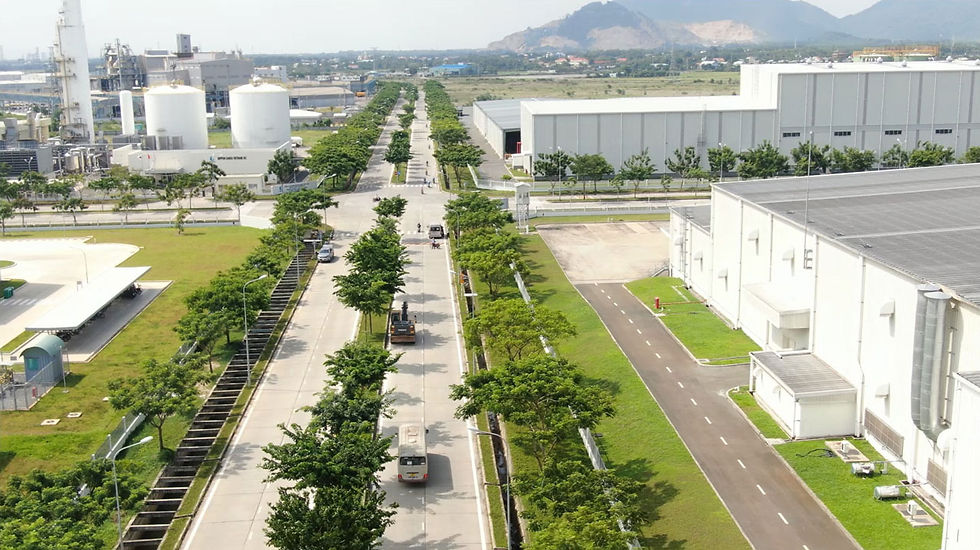
While global headlines focus on supply chain chaos, ASEAN and Japan are steadily building a more diversified, transparent, and lower-carbon partnership — one that could reduce vulnerability and unlock new growth opportunities if both sides move beyond pilot projects to scaled collaboration (ASEAN-Japan Economic Partnership for a Sustainable and Resilient Future, 2023).
Key Facts
ASEAN and Japan have deepened economic ties since their 2008 Comprehensive Economic Partnership Agreement, and Japan remains a major investor, technology partner, and source of industrial know-how in Southeast Asia (ASEAN-Japan Economic Partnership for a Sustainable and Resilient Future, 2023).
The partnership increasingly emphasises resilience through diversification, digital traceability, and sustainability, especially in critical minerals, automotive components, electronics, and related manufacturing network (Joint Statement on the ASEAN-Japan Mutually Beneficial Partnership on Environment and Climate Change for Materializing New Growth, 2025).
Recent joint initiatives have focused on supply-chain visibility, alternative production hubs, and lower-emissions logistics, alongside broader efforts to improve contingency planning and circular-economy practices (ASEAN-Japan Best Practices on Green Logistics, 2018).
Background
Repeated disruptions — from the pandemic to climate shocks and geopolitical tensions — have shown how fragile highly concentrated supply chains can be. ASEAN, as a manufacturing base, and Japan, as a source of advanced technology and capital, both have strong incentives to reduce dependence on single points of failure while meeting rising expectations for environmental performance (Joint Statement on the ASEAN-Japan Mutually Beneficial Partnership on Environment and Climate Change for Materializing New Growth, 2025).
This makes the relationship strategically important. Instead of relying only on efficiency, the two sides are increasingly talking about resilience, traceability, and responsible sourcing as core supply-chain priorities (ASEAN-Japan Economic Partnership for a Sustainable and Resilient Future, 2023).
Indonesian & ASEAN View
Indonesia sees this partnership as especially relevant. Its strengths in nickel, palm oil, and other resources complement Japan’s expertise in high-precision manufacturing, quality control, and long-term industrial planning. Japanese investment in Indonesian downstream processing has already expanded, but the bigger prize lies in moving from commodity exports to integrated, higher-value supply chains (MIDA And JETRO Formalise Three-Year Cooperation Framework As Expo 2025 Osaka Yields RM12.79 biliion in Investment Leads, 2025).
Across ASEAN, the collaboration offers a chance to reduce over-reliance on any single market while attracting quality investment that supports industrial upgrading. The opportunity is real, but so is the risk that the benefits concentrate in a few larger hubs unless smaller economies and suppliers are deliberately included (ASEAN-Japan Economic Partnership for a Sustainable and Resilient Future, 2023).
Analysis
ASEAN and Japan are making tangible progress on diversification, visibility, and sustainability. (Joint Statement on the ASEAN-Japan Mutually Beneficial Partnership on Environment and Climate Change for Materializing New Growth, 2025).
Yet several deeper questions remain underexplored:
How will smaller ASEAN economies ensure they are not left on the sidelines as larger players capture most of the new investment and supplier activity?
Will Japanese companies’ preference for high standards and tight oversight create unintended barriers for local SMEs trying to join upgraded supply chains?
Are current efforts addressing the full environmental and social footprint of supply chains, or mainly the risk exposure of lead firms?
In a more fragmented global trading environment, can ASEAN-Japan cooperation serve as a genuine counterweight to over-concentration in any single major power’s supply networks?
These questions are not academic. They will determine whether the partnership delivers broad-based resilience and shared prosperity, or simply shifts risk and reward among a smaller group of players (Joint Statement on the ASEAN-Japan Mutually Beneficial Partnership on Environment and Climate Change for Materializing New Growth, 2025).
Practical Implications for Businesses
Small and mid-sized suppliers can access new markets and technology if they invest in traceability, certification, and sustainability standards (ASEAN-Japan Economic Partnership for a Sustainable and Resilient Future, 2023).
Mid-tier manufacturers may gain more stable component flows and potentially lower risk premiums through diversified sourcing (ASEAN-Japan Economic Partnership for a Sustainable and Resilient Future, 2023).
Large corporations and multinationals can strengthen ESG credentials and reduce single-point failure risks by embedding ASEAN-Japan strategies into global operations (ASEAN-Japan Best Practices on Green Logistics, 2018).
Investors should monitor joint ventures in green logistics, critical minerals processing, and digital supply-chain platforms as potential diversification plays (ASEAN-Japan Best Practices on Green Logistics, 2018).
What Should Happen Next?
The next phase needs to move from high-level commitments to measurable outcomes. Both sides should expand pilot projects on traceability, scale technical assistance for SMEs, and create clearer investment facilitation mechanisms for sustainable supply-chain projects (ASEAN-Japan Economic Partnership for a Sustainable and Resilient Future, 2023).
A dedicated resilience framework with targets for diversification, decarbonisation, and SME inclusion would give the collaboration more practical force. Businesses can accelerate progress by forming cross-regional industry alliances and sharing best practices on risk management and circular-economy models (ASEAN-Japan Best Practices on Green Logistics, 2018).


