Liberalization Showdown: How Air Services Deregulation Could Reshape ASEAN Connectivity
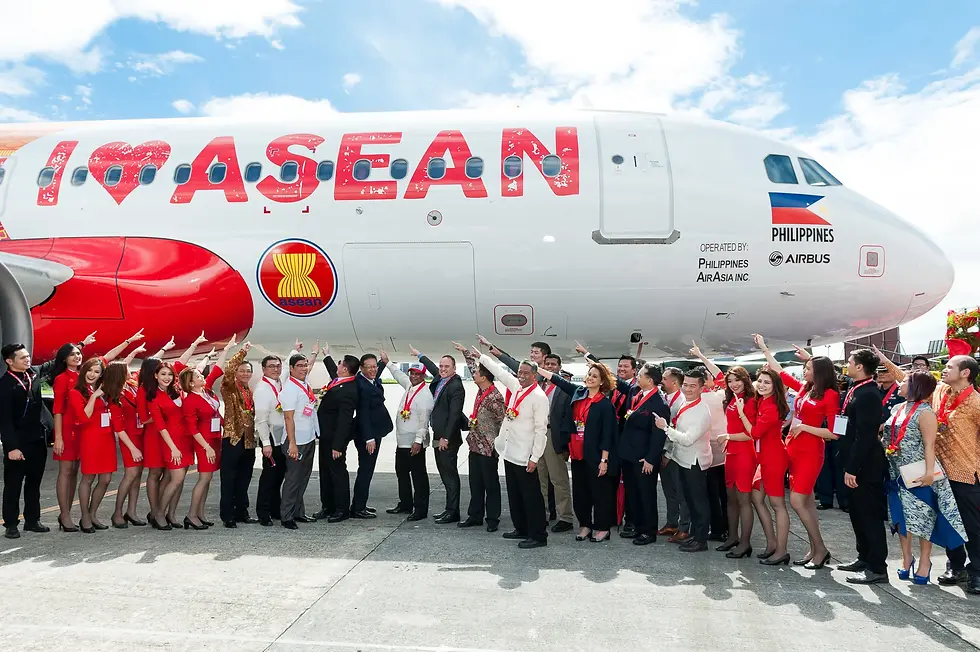
ASEAN is on the verge of significant air services liberalization, led by Thailand and Singapore, that could dramatically increase connectivity, lower fares, and boost trade and tourism — but also trigger fierce competition, consolidation, and major disruption for weaker carriers (Strengthening the ASEAN Single Aviation Market: Implementing the AEC Blueprint 2025 for Air Transport, 2018).
Key Facts
Thailand is actively pushing for greater liberalization to strengthen Bangkok’s regional hub status (Thailand and 4 Southeast Asian nations agree to share aviation safety data, 2024).
Singapore continues leveraging Changi as a global aviation powerhouse through aggressive bilateral and multilateral agreements (Singapore Airlines signs strategic MOU with Thai Airways, 2022).
The long-term aim is the full realization of the ASEAN Single Aviation Market (ASAM) (ASEAN Aviation Services and Liberalization, 2018).
Full deregulation would remove many route restrictions, capacity limits, and pricing controls across the region (Multilateral Air Transport Liberalisation Frameworks in Asia, 2026).
Background
ASEAN aviation has historically progressed through restrictive bilateral agreements, with the Roadmap for Integration of the Air Travel Sector (RIATS) and related accords charting incremental liberalisation toward ASAM (ASEAN Aviation Services and Liberalization, 2018).
Recent statements and MoUs from regional governments and carriers indicate renewed momentum toward more open skies and multilateral cooperation frameworks (Multilateral Air Transport Liberalisation Frameworks in Asia, 2026).
Indonesian Vantage Point
Indonesia has been cautious about rapid liberalization to protect Garuda and its extensive domestic network, even as businesses and consumers stand to benefit from lower fares and better connectivity (ASEAN Aviation Services and Liberalization, 2018).
Jakarta’s challenge will be balancing consumer gains with preserving viable national carriers or steering their consolidation/partnerships to compete in a more liberalised market (Singapore Airlines and THAI Airways form new strategic alliance, 2022).
Analysis
Liberalisation promises tangible benefits: increased route frequency and connectivity, lower fares, stronger tourism growth, and improved air‑cargo links that support regional supply chains — trends documented in IATA connectivity reporting and regional aviation analyses. Full‑service carriers with major hubs and aggressive low‑cost carriers are well positioned to gain; conversely, smaller flag carriers with high costs may face consolidation pressure or the need to form strategic alliances to survive (Asia’s Regional Aviation Set for Significant Growth in 2025, 2025).
Airline Route Expansion Examples
AirAsia Group has expanded aggressively across ASEAN, launching new regional routes and positioning for faster market access.
Singapore Airlines is strengthening hub connectivity with new routes and increased frequencies between Singapore and major ASEAN cities.
VietJet and affiliated carriers have rapidly added regional leisure routes to capture price-sensitive travel demand.
Lion Air Group (including Batik Air) continues to focus on secondary city pairs, filling connectivity gaps across Indonesia and the region.
The Winners
Full-service carriers with strong hubs (Singapore Airlines, Thai Airways).
Aggressive low-cost carriers (AirAsia, VietJet).
Major hub airports (Changi, Suvarnabhumi, KLIA).
The Losers
Weaker flag carriers with high cost structures.
Smaller regional airlines lacking scale.
Secondary airports facing traffic diversion to major hubs.
The Broader Economic Impact
Trade & Supply Chains: Faster and cheaper air cargo movement will benefit exporters and just-in-time supply chains (International Air Connectivity in 2025, 2025).
Tourism: New routes to secondary destinations could significantly boost visitor numbers and spread tourism benefits beyond capitals (Asia’s Regional Aviation Set for Significant Growth in 2025, 2025).
Investment: Improved connectivity attracts more foreign direct investment by lowering transaction and travel costs (International Air Connectivity in 2025, 2025).
What Should Happen Next
ASEAN should pursue a phased but ambitious liberalization strategy with clear timelines, infrastructure investment commitments, and support mechanisms for workers and weaker carriers (Strengthening the ASEAN Single Aviation Market: Implementing the AEC Blueprint 2025 for Air Transport, 2018).
Thailand and Singapore’s current push should be used to build regional momentum while ensuring smaller economies and carriers are not left behind. Airport capacity constraints — slots, ground handling, and airport surface access — must be addressed urgently to prevent congestion and service degradation (Thailand and 4 Southeast Asian nations agree to share aviation safety data, 2024).
The next 3–5 years will be decisive. Successful air services liberalization could become one of ASEAN’s most important economic‑integration achievements, reshaping connectivity, tourism, and regional supply chains — provided the process balances competition with support for transition (International Air Connectivity in 2025, 2025).


