ASEAN+3 Pushes Regional Financial Resilience as Energy Shocks Test Fiscal Buffers
- Mar 24
- 3 min read
Summary
The Philippines is leading efforts within the ASEAN+3 Finance Process to advance concrete measures for regional financial resilience, with a strong focus on disaster risk financing and coordinated policy responses to global and regional shocks. During the second Task Force Meeting in Osaka (3–4 March 2026), member economies backed a roadmap for preparedness and expressed support for the Philippines- and Japan-led Sovereign Asset and Fiscal Empowerment (SAFE) Facility and ASEAN+3 Fiscal Exchange. As Middle East disruptions drive oil and LNG price volatility, the push underscores the need for shared fiscal tools to protect growth, public finances and livelihoods across the region.
Recount of Events
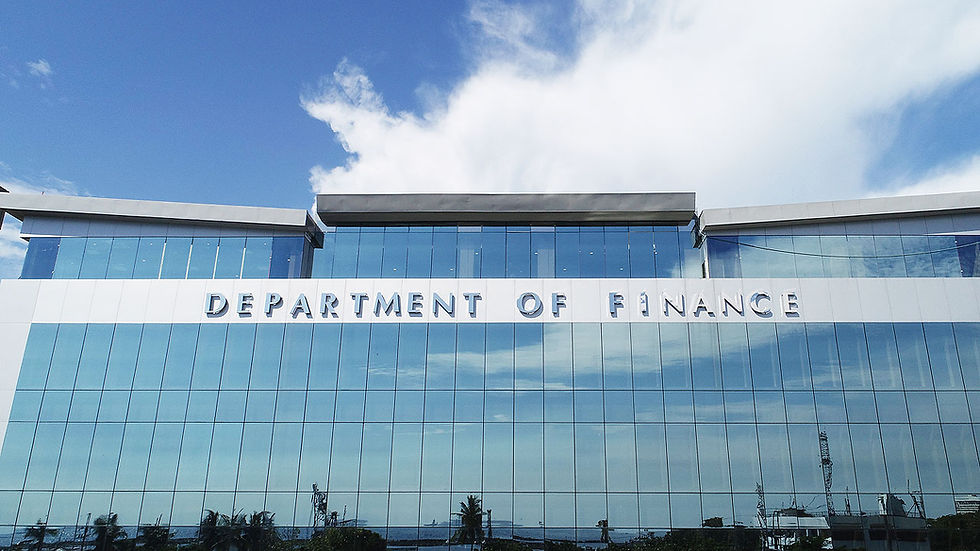
On 23 March 2026, the Department of Finance (DOF) announced it is advocating stronger regional financial cooperation within ASEAN+3 — the Association of Southeast Asian Nations plus China, Japan and South Korea. The framework, established in 1997, serves as a platform for discussing macroeconomic developments and addressing shared risks.
DOF highlighted recent progress during the second Task Force Meeting in Osaka (3–4 March 2026), co-chaired by the DOF and Bangko Sentral ng Pilipinas (BSP), alongside Japan’s Ministry of Finance and Bank of Japan. International Finance Group Assistant Secretary Donalyn U. Minimo noted that disruptions in the Strait of Hormuz and resulting oil/LNG volatility directly affect fiscal space, economic growth and livelihoods.
Member economies supported continued collaboration and a roadmap for regional resilience and preparedness, to be discussed further at the ASEAN+3 Finance and Central Bank Deputies’ Meeting (AFCDM+3) in April 2026. The DOF also advanced its championed Sovereign Asset and Fiscal Empowerment (SAFE) Facility, which embeds disaster insurance into development projects financed by bilateral and multilateral partners.
The Philippines- and Japan-led ASEAN+3 Fiscal Exchange platform continues to facilitate sharing of best practices among finance ministries. The efforts align with the Philippines’ 2026 ASEAN chairmanship theme “Navigating Our Future, Together” and the ASEAN+3 Macroeconomic Research Office’s increasing focus on climate and energy risks in regional surveillance.
Analysis
From an Indonesian vantage point, the Philippines’ push within ASEAN+3 feels both timely and urgent. We know only too well how quickly energy price shocks — whether from Hormuz disruptions or weather extremes — can squeeze fiscal space, push up inflation and hit households and SMEs hard. The DOF’s emphasis on disaster risk financing and coordinated responses is a welcome recognition that individual economies cannot fully shield themselves from regional and global spillovers.
The SAFE Facility concept is particularly interesting. Embedding insurance directly into development projects could reduce post-disaster fiscal strain — a major issue for Indonesia when typhoons or floods damage infrastructure. If scaled regionally, it could lower borrowing costs for climate-vulnerable projects and free up budget space for growth priorities like downstream nickel processing or renewable energy deployment.
But several practical questions remain under-discussed:
With ASEAN+3 economies facing divergent fiscal capacities, how will funding and risk-sharing be structured so smaller members aren’t left behind in disaster resilience?
As energy volatility directly impacts inflation and growth, why isn’t ASEAN+3 accelerating joint procurement or shared strategic reserves instead of relying on bilateral deals?
The SAFE Facility embeds insurance into projects — but how will it be financed, and will premiums remain affordable for climate-exposed economies like Indonesia and the Philippines?
With the AFCDM+3 meeting in April 2026, what concrete deliverables (timelines, funding commitments, pilot projects) are member economies committing to so the roadmap doesn’t become another aspirational document?
ASEAN+3’s financial cooperation has matured since the 1997 crisis, but today’s shocks — climate, energy, geopolitics — demand faster, more tangible action. For Indonesian businesses and policymakers, stronger regional fiscal buffers would mean less pressure on the rupiah during price spikes, more predictable lending conditions and greater capacity to invest in resilience and growth. The Philippines is setting the tone; the rest of ASEAN+3 must now match words with enforceable commitments. In an era of compounding risks, shared financial resilience is not a luxury — it is a necessity.


